Family Owned. Midwest Values. National Reach                                                                                              Call Now: 877-247-1975 GET A QUOTE

Latest Blog

Asphalt Paving : What is the Recommended Thickness
Latest Blog

Asphalt Paving: What Is the Recommended Thickness?

Asphalt Paving: What Is the Recommended Thickness?

When you need to have a modern parking lot, roadway, or other pavement constructed, asphalt paving is typically an ideal material for most surfaces that will be used by pedestrians, cyclists, or vehicles. Asphalt is economical, durable, and attractive, and it can be installed and repaired quickly. A long-lived pavement that does not require constant repairs will require careful engineering and a high-quality installation that conforms to the engineering specifications. One critical part of the design specifications is the calculation of the thickness of the asphalt. If the asphalt layers are too thin, the pavement will be more likely to develop significant cracks and other damage patterns within a relatively short time. However, making the layers too thick is a waste of your money.

How Do Contractors Know How Thick Paving Should Be?

One of the first questions an asphalt contractor will ask you will concern your planned usage of the pavement. As you might expect, pavements that will receive a high volume of traffic or heavy loads will need to be stronger than the driveway at a suburban home. After evaluating the soil and drainage at the site, the asphalt paving company will determine whether to place the asphalt layers on top of an aggregate base or directly on top of the soil. This decision is critical because it can affect the total asphalt thickness required to provide the pavement strength desired. Another important decision is the selection of the asphalt mix. There are several different mix types, and the thickness of the layers can be affected by the maximum size of the aggregates included in the mix.

Asphalt Paving : What is the Recommended Thickness

Is It Possible to Provide a Rough Estimate of Asphalt Paving Thickness for Different Pavement Uses?

Depending on the pavement’s use, your asphalt contractor may recommend a thickness of as little as two inches or as much as eight inches. In certain rare cases, the recommended thickness could be as much as 10 inches. Listed below are the typical recommendations for selected residential and Chicago commercial paving projects.

• Parking lots that serve both passenger vehicles and trucks should have an asphalt thickness of at least four inches.
• Parking lots that serve primarily heavy trucks should have an aggregate base of at least three inches, topped by at least six inches of asphalt.
• Residential driveways typically have between two and three inches of asphalt over six inches of aggregate.
• Commercial driveways can often have a minimum of three to four inches of asphalt over an aggregate base of at least eight inches.
• Walkways and trails that are only used by pedestrians or bicyclists usually have an asphalt thickness between three and five inches if constructed without an aggregate base. If an aggregate base is installed, the thickness of the asphalt could be as little as two or three inches.
• Roadways can have an asphalt thickness of as little as four inches or as much as 12 inches. It all depends on the type of street or highway, the loads it will bear, and whether the asphalt is applied over an aggregate base.
Asphalt overlays are normally less than three inches in depth, especially if they are installed over a concrete pavement. If installed as part of asphalt milling and pavement resurfacing, the thickness of the asphalt overlay could be equal to the pavement’s original depth.

Black Hawk Paving specializes in commercial paving installation, repair, and maintenance. Our asphalt paving services include new construction and pavement resurfacing, sealcoating, crack repairs, milling, and pothole repairs. We also offer concrete flatwork and concrete repair, parking lot striping, site grading, car stops, excavations, traffic signage, and sewer repairs. We have been serving Chicagoland with exceptional work and outstanding customer service since 1975. If you are interested in a free quote, complete the online request form, email Info@BlackHawkPaving.com, or call 708-479-0400.

Can Asphalt Repair Be Done In Rainy Weather?
Latest Blog

Can Asphalt Repair Be Done in Rainy Weather?

Can Asphalt Repair Be Done in Rainy Weather?

When you had your asphalt pavement installed, your contractor probably mentioned that you should quickly repair any potholes, cracks, or other pavement breaks. If breaks are left open to the weather, rain and meltwater will drain into the breaks, be drawn downward by gravity, and inflict damage on all layers of the pavement as well as the supporting foundation. Correcting the damage that water penetration can inflict is often costly and time-consuming if the pavement is salvageable. If the damage is too extensive, repairs may not be cost-effective or possible, so the pavement may need to be removed and replaced. Given the connection between rain and structural damage, many people wonder whether a contractor can perform an asphalt repair in rainy weather. In most cases, contractors will not attempt to repair an asphalt pavement in rainy weather, but there can be exceptions.

What Types of Damage Can an Asphalt Repair Fix?

Asphalt patching is a common roadway and parking lot repair method that can be used to address alligatored asphalt, potholes, and other types of pavement damage. It can also be used to correct some types of pavement distress, certain installation errors, and some drainage issues.

How Is Asphalt Patching Performed?

An area slightly larger than the damaged pavement is removed, typically by sawing it out. If the foundation needs to be repaired or reinforced, your asphalt contractor will likely recommend a full-depth patch. For damage that affects only the top inch or so of the pavement, a skin patch might be the solution, and a partial-depth patch might be used on pavements with deeper damage that do not require work on the foundation. Once they have removed the correct depth of asphalt paving Chicago contractors typically replace it with hot mix asphalt. This is pretty much the gold standard for commercial paving repairs, and it is classified as a permanent repair. Virtually no reputable commercial paving company will attempt to install hot mix asphalt in the rain. However, in an emergency, there are other materials that can be used under damp conditions to provide a temporary repair that will at least keep the rain from getting under the surface of the pavement.

Can Asphalt Repair Be Done In Rainy Weather?

Why Would a Chicago Asphalt Paving Company Delay a Repair Because of Rain?

There is an old saying about the inability of oil and water to mix. Asphalt contains oil, so it works very well as a water repellent. When rain falls on hot asphalt, the asphalt tries to repel the water instead of focusing on curing. A passing shower is not likely to have much of an impact, but an extended or heavy downpour can leave the surface cratered or cracked. If a contractor is surprised by a sudden storm, it may be necessary to reschedule the job, or, if the job is already underway, to postpone the rest of the work.

As a Chicago Asphalt Paving Company, Does Black Hawk Paving Repair Asphalt Pavements?

Black Hawk Paving offers all types of asphalt repairs. Our other paving services include parking lot striping, asphalt paving, asphalt overlays, asphalt milling, hot crack sealing, asphalt sealcoating, site grading, excavations, concrete flatwork, traffic signage, asphalt fabric, car stops, and traffic signage. We have been serving Chicagoland since 1975, and we have earned an impeccable reputation for craftsmanship, professionalism, honesty, and customer service. We would be happy to create a free quote for you. You can use our online form to submit your request, or you can give us a call at 847-240-2560, 708-479-0400, or 773-378-2390.

What Is the Asphalt Paving Life Expectancy?
Latest Blog

What Is the Asphalt Paving Life Expectancy?

What Is the Asphalt Paving Life Expectancy?

Whether you are investing in asphalt paving for your home, business, or municipality, you will likely have many questions that you would like answered. You will probably ask your contractor how much the job will cost, when work will commence and end, and how you should care for your new pavement. However, one of the most critical pieces of information you need to obtain from your contractor is the pavement’s estimated life expectancy. The precise life of an asphalt pavement will depend on a number of factors, including the quality of the installation, the preventive maintenance it receives throughout its life, the timeliness of repairs, and the loads to which the pavement is subjected. Therefore, no one can predict the exact date on which you will need to have your pavement resurfaced or rebuilt. It is possible to estimate a pavement’s life expectancy, though, assuming a quality installation, proactive maintenance, rapid repairs, and prohibitions against overloading.

How Long Will Asphalt Paving Last on a Residential Driveway?

A newly constructed home driveway should last at least 20 years, and it is possible for it to have a life of more than 30 years. Due to the harsh weather that Chicago asphalt paving must endure, most contractors estimate the life of a residential driveway at 20 to 25 years. If you have your driveway resurfaced, the asphalt overlay will usually have a life of 10 to 12 years, but, under certain conditions, some overlays can last 15 to 20 years.

When Paving Chicago Streets, How Long Does a Paving Contractor Expect the Pavement to Last?

Life expectancy primarily depends on the volume and weight of the traffic that the street supports. In a gated community, the streets could easily last for more than 20 years. On a busy boulevard that is heavily trafficked by every type of vehicle from subcompact cars to 18-wheelers, an asphalt paving company typically estimates a pavement life expectancy of 15 to 20 years.

What Is the Life Expectancy of Asphalt Paving Parking Lots?

Like streets, parking lots can support a variety of vehicle types and weights. Typically, a paving company estimates the life of a parking lot that supports passenger vehicles exclusively at 20 to 25 years. A mixed-use lot often has a life that is between 15 and 20 years. Enforcing weight limits, sealcoating your parking lot, and repairing any damage as soon as it happens can increase the pavement’s life by 10 to 18 years.

What Is the Asphalt Paving Life Expectancy?

How Long Does an Asphalt Contractor Expect Highway Paving to Last?

Busy highways, including interstate highways, typically need to have an asphalt overlay installed every 10 to 12 years. Lightly trafficked rural highways frequently require resurfacing every 15 to 20 years.

Why Is Black Hawk Paving the Chicago Asphalt Paving Company to Choose?

You can start with our experience; we have completed almost 4,800 significant projects since we opened our doors in 1975. Next, we can provide you with impeccable references from our thousands of happy customers; your total satisfaction with everything we do is our primary goal. We are a full-service Chicago commercial paving company; our services include asphalt resurfacing and paving, parking lot striping, asphalt repair, concrete work, asphalt milling, excavations, asphalt sealcoating, site grading, and traffic signage. We are equipped to handle projects of all sizes; our employees are among the best in the industry, and we have excellent, well-maintained equipment. We work with Chicagoland businesses, national clients, counties and municipalities, nonprofit organizations, and virtually every other type of enterprise. We also make it easy for you to request a free quote; simply submit our online form, or send an email to Info@BlackHawkPaving.com. You can also call us, if you prefer, by choosing the phone number for the area in which your property is located. In Chicago proper, call 773-378-2390, or call 708-479-0400 in the south suburbs.

Asphalt Paving – What is Binder & Topcoat? chicago paving company
Latest Blog

Asphalt Paving – What is Binder & Topcoat? | Chicago Asphalt Paving

Asphalt Paving – What is Binder & Topcoat? | Chicago Asphalt Paving

It takes great attention to detail and the careful execution of numerous steps to create a safe, well-engineered, and long-lived asphalt pavement. When discussing paving methods, technologies, and products among themselves, contractors frequently use terms that are unfamiliar to people who are not involved in the asphalt industry. However, contractors may also use recognizable terms that actually have very different meanings when applied to asphalt paving projects than they have when used for other purposes, and two of these are binder and topcoat.

What Are the First Steps in Installing Asphalt Paving?

The site will be cleared of vegetation and existing structures, then the soil is leveled, graded, and compacted. If necessary, the soil may be amended by removing its top layers and replacing it with a more suitable soil. The next step is to construct and compact an aggregate base. The binder can then be installed.

When Discussing Asphalt Paving, What Is the Binder?

The binder, also known as the base coat, is a layer of asphalt that is installed on top of the base. Binders are load-bearing courses that consist of hot mix asphalt and aggregate. Since the binder must have the strength to withstand loads as well as seasonal expansions and contractions, most Chicago asphalt paving contractors use aggregates measuring about three-fourths of an inch in size. However, the overall thickness of the binder will be calculated for each job to account for the number and weights of the vehicles that will have access to the pavement.

Asphalt Paving – What is Binder & Topcoat? chicago paving company

What Comes Next in the Construction of an Asphalt Pavement?

After the binder is installed and compacted, your paving contractor will place and compact the next layers of asphalt, known as the intermediate courses. The aggregates in these courses will be slightly smaller than those in the binder. After installing the intermediate courses, an asphalt contractor then installs the topcoat.

What Is an Asphalt Pavement’s Topcoat?

The pavement’s topcoat, also referred to as the finish course or surface course, is the asphalt layer that is installed on top of all other asphalt layers. Since a topcoat needs to provide a smooth ride, have aesthetic appeal, and minimize pavement noise, your asphalt contractor will use smaller aggregates in the mix than were used for the binder. Topcoat aggregates are usually no larger than half an inch in size. Like the binder, the thickness of the surface course will depend on the type of loads that the pavement is expected to bear.

Let Black Hawk Paving and Construction Assist You

Black Hawk Paving & Construction is a respected commercial paving company serving clients throughout Chicagoland with an extensive list of pavement-related services, including asphalt overlay and paving, concrete flatwork, asphalt repairs, sealcoating, site grading, hot crack sealing, asphalt milling, parking lot car stops, concrete curbing, excavation, parking lot striping, asphalt fabric, sewer repair, traffic signage, and pavement markings. We have the staffing, equipment, and experience to complete projects of all sizes and types. We offer free quotes, so submit your request today by filling out the online form, calling 708-564-3142, or emailing Info@BlackHawkPaving.com.

Asphalt Paving: It's All about the Temperature & Timing
Latest Blog

Asphalt Paving: It’s All About the Temperature & Timing

Asphalt Paving: It’s All About the Temperature & Timing

The numerous advantages of asphalt paving have made it the leading choice for pavements of virtually every type and size. However, to take full advantage of asphalt’s benefits, you need to hire a knowledgeable contractor with experience in the technical details of a paving operation, including the impact of temperature and timing.

How Does the Temperature Affect Asphalt Paving?

Paving contractors schedule the delivery of truckloads of asphalt from local production plants, and the material arrives with a temperature of up to 300 degrees Fahrenheit. This material must be placed and compacted while it is still hot enough to work. Depending on other factors, the acceptable mix temperature can be as high as 290 degrees, or it may be as low as 185 degrees. Two of the other factors are the air and ground temperatures, both of which need to be above 50 degrees; the principle of heat exchange means that the asphalt mix will lose heat to the cooler air or ground, and the greater the difference, the faster the heat will be lost. If too much heat is lost prior to compaction, the pavement will be weaker and rougher, and it will not have the aesthetic appeal that it should. The weather in the area is one important reason that asphalt companies in Chicago handle most paving projects between late May and early October. However, since the weather conditions can vary significantly from one year to the next, you should always contact a trusted asphalt company to see if it might be possible to complete your project outside of those times.

Asphalt Paving: It's All about the Temperature & Timing

Why Is Timing Important When Planning Asphalt Paving Projects?

As mentioned earlier, asphalt must be worked while its temperature lies within an acceptable range to ensure proper compaction. Therefore, crews must work quickly and efficiently to install each layer of asphalt and compact it. The speed with which they must work depends on the air and surface temperatures as well as the thickness of each asphalt layer; thin layers will lose their heat more rapidly than thick ones. When conducting asphalt resurfacing or installing new asphalt paving Chicago contractors must ensure that they have enough of the right equipment and a sufficient staff of qualified workers at the site. In cool weather, an asphalt paving company may need to send a larger crew, for example, or extra rolling machines to ensure that operations are completed within the proper time.

Are the Conditions the Same for Asphalt Patching as for Paving?

Most paving contractors consider permanent asphalt patching as both a repair method and a paving operation if it involves the removal and replacement of damaged pavement. However, there are temporary and semipermanent repair methods that are not as sensitive to ambient and ground temperatures as hot mix asphalt. Therefore, if you have an open pothole, an area of alligator cracking, or other break in your pavement, you should talk to a reliable asphalt maintenance or paving company to see about making a cold-weather repair to seal out rain and meltwater.

For Superior Paving Services, Contact Black Hawk Paving and Construction

Since 1975, we have provided Chicagoland customers with exceptional paving work and exemplary service at competitive prices. Our paving services include the installation of asphalt and concrete paving, car stops, and traffic signs; the repair of concrete pavements, sewer repair, and asphalt pavements; and asphalt resurfacing, concrete curbing, pavement markings, excavation, asphalt milling, site grading, and parking lot striping. You can submit our online form if you would like to request a free quote, or you can email Info@BlackHawkPaving.com. If you would rather speak to us over the phone, you can call one of our three numbers: 773-378-2390 for Chicago, 708-564-3142 for the southern suburbs, and 847-240-2560 for the northwestern suburbs.
Latest Blog

What Skills Are Required for a Chicago Commercial Paving Contractor?

What Skills Are Required for a Chicago Commercial Paving Contractor?

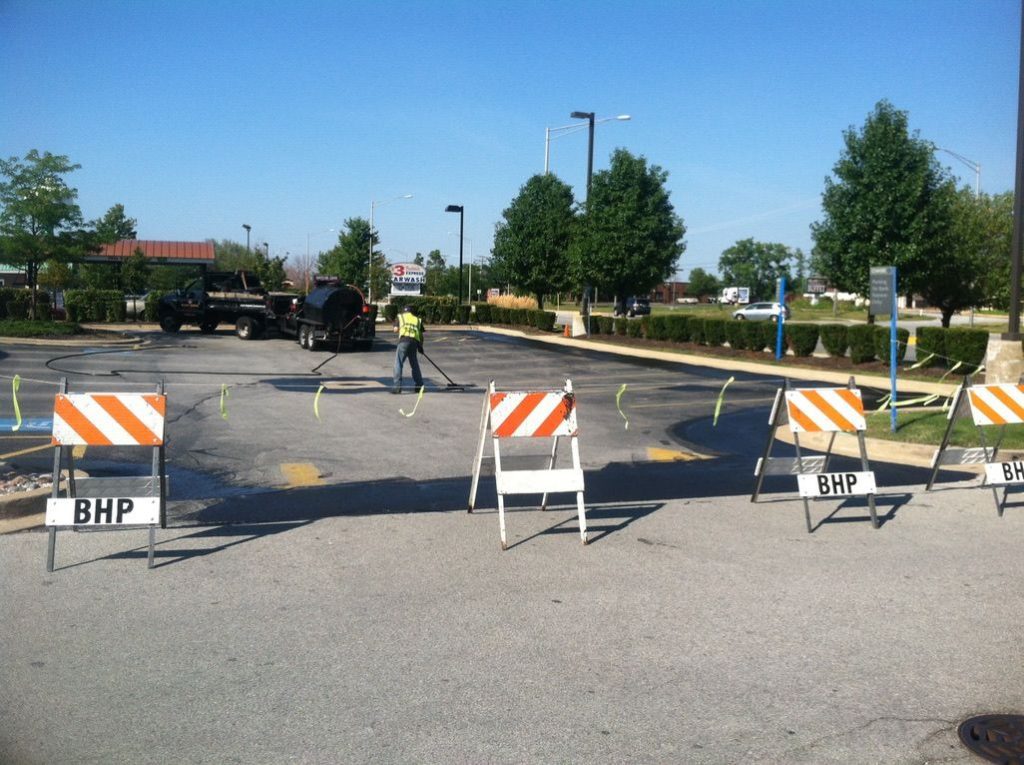
Whether you are installing an overlay, rebuilding a parking lot, or constructing new streets in a subdivision, the selection of your contractor is of paramount importance. Unless your contractor has the necessary skills, your commercial pavement could be an unsightly mess that deteriorates within just a few years. Furthermore, the entire project could be plagued by delays that annoy your customers, residents, or employees. Although it is important to select a competent contractor for residential paving projects, the contractor’s skills are decidedly more critical on commercial paving projects.

Why Are the Contractor’s Skills Extremely Important for Commercial Paving Projects?

First of all, commercial projects tend to be larger in scope than residential projects. For example, a suburban driveway typically covers about 600 square feet, but a parking lot that only provides spaces for 20 cars could cover 6,000 square feet or more. In addition, parking lot pavements are almost always designed to support a higher volume of traffic as well as potentially heavier vehicles. Typically, controlling traffic around the work area is also more complicated on commercial projects than on residential projects. As you probably know from your own business, the more complex a project is, the greater the need is for specialized expertise. Whether they are building a self-driving car, designing a dam near a fault line, or installing an asphalt overlay or new asphalt paving, the person responsible for the project must have the right skills. For an asphalt company, these skills include experience in everything related to all types of asphalt paving services. Whether you need a parking lot repair, an asphalt overlay, or any other type of Chicago asphalt paving service, be sure to select a contractor with relevant experience and skills.

chicago commercial paving

What Are Some of the Skills My Commercial Paving Contractor Should Possess?

When you start searching for a paving company to install or repair your asphalt pavement, you want to find an asphalt company that has extensive experience with commercial pavements that are similar in complexity to your own project. You will need to ask questions, conduct your own research, and seek recommendations from other property managers you know and trust. As you proceed, look for evidence that the Chicago asphalt paving contractor you are considering has the following skills.

1. Paving contractors need the ability and willingness to pay careful attention to details. Paving projects typically require multiple asphalt deliveries that must be carefully timed to ensure that the mix can be placed and compacted before it cools excessively. Traffic control measures must be planned in advance so that you can communicate vital information to your tenants or employees. The contractor will need to schedule the equipment and personnel to complete your project in a timely manner. There can be hundreds of little things that the contractor must consider, and overlooking a single detail could potentially have serious consequences.

2. Chicago asphalt paving contractors must be especially adept at interpreting the weather forecasts. Although Chicagoland weather can turn on a dime, experienced contractors prefer to schedule jobs when conditions are the most favorable so that the work will be of a high quality, delays will be minimized or eliminated, and your business operations will not be unnecessarily impacted.

3. An experienced, reputable asphalt company will be able to evaluate your paving needs to find the most cost-effective solution. For example, in some cases, the contractor might recommend a parking lot repair instead of a full overlay, or he might recommend an overlay instead of a total reconstruction. Look for a contractor with the skills and tools to conduct a thorough evaluation of your entire site, including potential drainage issues, base integrity, and soil conditions.

4. A great paving company understands the importance of routine maintenance for extending the life of an asphalt pavement. Furthermore, they keep their equipment properly maintained to reduce the possibility of a failure in the middle of your job. Always ask potential contractors how they maintain their equipment, whether they have duplicates that could be brought in if a failure occurs during your project, and whether they own all of the equipment needed for your project.

At Black Hawk Paving, our goal is to protect the investments of our customers through quality work, honesty, and education. We have been paving the Chicagoland area since 1975. Our asphalt paving services include repairs, new installations, overlays, crack sealing, sealcoating, and asphalt milling, and we also offer parking lot striping, concrete curbing, traffic signage, concrete flatwork, car stops, site grading, pavement markings, sewer repairs, and excavations. We are known for our workmanship, integrity, and customer service. If you would like for us to prepare a free quote, you can make your request by filling out the online form, emailing Info@BlackHawkPaving.com, or calling 708-419-3028.

What Is Full-Depth Asphalt Patching? | Chicago Asphalt Repair
Latest Blog

What Is Full-Depth Asphalt Patching? | Chicago Asphalt Repair

What Is Full-Depth Asphalt Patching? | Chicago Asphalt Repair

Although asphalt pavements can be durable and economical, they can incur damage from stress, weather, and neglect. Potholes, alligator cracking, and other breaks need to be repaired if the pavement is to be salvaged. Patching is a popular asphalt repair that can be used to repair a variety of pavement faults, and one of the most popular types of patches is the full-depth patch.

What Are the Different Types of Patches Used for Asphalt Repair?

Asphalt and paving contractors use several different terms to describe a patch, but the various types can be broadly categorized as surface, partial-depth, or full-depth patches. The names of the categories provide clues about how deep into the pavement the patch will extend.

1. A surface patch, which some contractors call a skin patch, typically does not reach deep into the pavement. As it is not a long-lasting repair, asphalt companies in Chicago usually reserve surface patches when the client has an urgent need for a temporary repair, the weather does not permit another repair method, or the client is planning to resurface or rebuild the pavement within a few months.
2. Partial-depth patches require the removal of the damaged pavement to a precise depth, which may be as little as one or two inches. A partial-depth patch can be a good repair method for several issues, including shallow potholes and certain types of cracks.
3. Full-depth asphalt patching is usually the longest-lasting repair method, and it is the best method to use to repair damage to the base layers, strengthen an area of an existing pavement, or repair alligatored asphalt.

What Is Involved in Making an Asphalt Repair Using Full-Depth Patching?

The first step is to remove all layers of the asphalt and as much of the base as is needed. If the area is large, contractors often use a process known as asphalt milling to remove the material quickly. They may also remove the asphalt by using a saw to cut out the damaged pavement. After completing any work needed to the foundation, the void is prepared, and new asphalt is placed and compacted.

What Is Full-Depth Asphalt Patching? | Chicago Asphalt Repair

Is an Asphalt Overlay a Type of Patch?

Some contractors consider overlays as a type of asphalt paving, but others consider them to be a repair or a type of restorative asphalt maintenance. To install an overlay, most contractors use an asphalt milling machine to remove the top two to four inches of pavement, then replace and compact the asphalt to return the pavement to its original depth. Normally, a large overlay is not cost-effective if a pavement needs extensive foundation repairs. Therefore, overlays are seldom more than partial-depth patches, but they can be full-depth patches under certain conditions.

Black Hawk Paving & Construction Can Help

Blackhawk Paving is a full-service paving company helping commercial clients in the greater Chicago area build, maintain, and repair their pavements since 1975. Our services include asphalt patching, hot crack sealing, asphalt paving, concrete flatwork, asphalt milling, excavation and grading, asphalt sealcoating, traffic signs, parking lot striping, asphalt repairs, sewer repairs, asphalt fabric, and car stops. We have built our exemplary reputation on the exceptional quality of our work, our dedication to customer service, and our integrity. Contact us for a free quote by calling 708-316-9563, filling out the online request form, or emailing Info@BlackHawkPaving.com.

Asphalt Crack Sealing or Filling? Chicago Paving Companyg
Latest Blog

Asphalt Crack Sealing or Filling? Black Hawk Paving & Construction

Asphalt Crack Sealing or Filling? Black Hawk Paving & Construction

Although asphalt pavements are extremely durable, even the best asphalt will eventually crack. Leaving cracks unrepaired can reduce the life of the pavement by as much as 67%. Water entering through cracks can inflict so much damage on the pavement’s foundation that the only way to correct the problem is to remove and rebuild the pavement. Water is bad enough, but the trapped water will freeze in the winter, and the expanding ice will intensify the damage. Many property managers and business owners, however, are not sure whether they should hire a contractor to perform asphalt crack sealing or crack filling.

Is Asphalt Crack Sealing the Same Thing as Sealcoating?

Although sealcoating is sometimes referred to as asphalt sealing, asphalt crack sealer is very different from a sealcoat. Most Chicago paving contractors classify sealcoating as a preventive maintenance procedure, but they consider both crack sealing and crack filling as restorative routine maintenance procedures. In other words, sealcoating is meant to help prevent cracks from forming, and filling and sealing are asphalt crack repair methods to take care of cracks that have already formed.

Is Asphalt Crack Sealing the Same Thing as Asphalt Crack Filling?

The terms are nearly identical, and either method can repair a crack so that water cannot intrude. However, there are some differences, and the most important one is that the methods use different products. Asphalt crack sealer is a strong, pliable material that can flex with temperature changes and loads without breaking its bond with the pavement. This is an important consideration for Chicago paving that is subjected to radical temperature fluctuations on a regular basis. Asphalt crack filler hardens as it cures, becoming rigid and inflexible. Since asphalt filler cannot expand or contract to keep pace with the actions of the pavement, the bond between the filler and the pavement can break, leaving an area exposed to water infiltration. Typically, an asphalt paving company will describe crack filling as a temporary asphalt crack repair method and crack sealing as a permanent repair method.

Asphalt Crack Sealing or Filling? Chicago Paving Companyg

Which Asphalt Crack Repair Method Should I Choose?

Most reputable contractors have both filling and sealing in their paving services toolboxes. To recommend which of the two methods is best for you, they will first assess your pavement to determine the extent of the damage. They will also want to determine whether a crack is active or inactive. Because asphalt crack filler cannot move when the pavement moves, it is not typically used to repair active cracks. Fortunately, almost every type of crack can be repaired with asphalt crack sealer. Although crack sealing may cost a little more, it is often more economical; you may never need to have the same crack sealed again. This is not the case with crack filling; you could wind up having the same crack or cracks filled every year throughout the pavement’s life. The critical point that you need to remember is that any repair that prevents water infiltration is better than no repair. Therefore, even a temporary repair now can help you prevent a costlier repair later.

Contact the Pros at Black Hawk Paving

Since opening our doors in 1975, we have earned an impeccable reputation for workmanship, customer satisfaction, integrity, and creativity. Black Hawk Paving offers an extensive range of paving services, including asphalt crack repair, asphalt paving, parking lot striping, asphalt milling, sealcoating, excavation, concrete work, site grading, asphalt fabric, parking lot signs and car stops, sewer repair, and pavement marking. We serve industrial and commercial clients throughout the greater Chicagoland area. If you are interested in receiving a free quote, you can use our online request form, or you can send an email to Info@BlackHawkPaving.com. If you prefer to call us, our number is 708-419-3028, or you can call 773-378-2390 or 847-240-2560.

Why Isn’t My Asphalt Paving Surface Smooth?
Latest Blog

Why Isn’t My Asphalt Paving Surface Smooth?

Why Isn’t My Asphalt Paving Surface Smooth?

Whether you had a contractor build an entirely new pavement or install an overlay, you expected it to have a smooth surface. If your pavement has a surface that is uneven, bumpy, or rough, this is virtually always a sign that your asphalt paving contractor made a mistake when constructing or resurfacing your pavement. These mistakes usually involve either the asphalt mix or the compaction of the asphalt.

What Errors Involving the Mix Can Affect the Smoothness of My Asphalt Paving?

There are two mistakes that a paving company can make when preparing a mix that can affect the smoothness of an asphalt pavement.

1. Whether they are preparing a residential or commercial paving mix, they must use enough asphalt to thoroughly coat the aggregate and bind everything together. The contractor providing your paving services may have made this error if you notice chips or lumps in your pavement.
2. A paving company must choose the correct aggregate mix. A good mix will contain crushed rock as well as sand or other small particulates so that compaction will knit everything into a strong, stable pavement. Although it may sound counterintuitive, the rocks in the mix should not be rounded or have smooth edges. Smooth, round rocks are extremely difficult to compact properly because they allow more space between them. The pavement’s integrity is impacted, and it can deteriorate easily, leaving the surface rough and uneven.

What Errors Involving Compaction Can Affect the Smoothness of My Asphalt Paving?

Proper compaction is critical, especially on commercial paving projects. If the surface of your pavement is littered with loose rocks, has a rough texture, or foot traffic is removing bits of aggregate or asphalt, a compaction error is a likely cause. Each layer of asphalt must be compacted while it is hot, including the surface layer. When performing asphalt paving Chicago contractors must schedule the deliveries of the hot asphalt carefully, and they must have the right equipment and sufficient staffing to place and compact the asphalt efficiently. Whether they are building a new highway, making a parking lot repair, or installing an asphalt overlay, contractors must ensure that the asphalt is thoroughly and correctly compacted.

Why Isn’t My Asphalt Paving Surface Smooth?

Are There Other Mistakes That Relate Specifically to the Installation of an Asphalt Overlay?

Errors in the mix design and compaction can apply to both new construction and an asphalt overlay installation, but there are some issues that are limited to overlays. Here are some tips to help avoid a bumpy overlay.

1. If a parking lot maintenance company has applied sealcoating to your pavement, it is best to wait at least a year before you install an asphalt overlay.
2. If crack sealant is present, an overlay should not be installed until the sealant is properly cured, which usually takes a minimum of six months.
3. Your contractor may need to apply a tack coat to ensure strong adhesion of the overlay.
4. Make sure that your contractor has the right rollers and skilled operators. The goal is to make as few passes as possible with the roller, use a slower speed for the final compaction, and avoid the use of a breakdown roller whenever possible.

Black Hawk Paving is a Chicago paving contractor and we have been providing exceptional paving services since 1975. We offer a full range of services, including asphalt repair and paving, concrete flatwork, asphalt overlays, parking lot striping, site grading, asphalt milling, traffic signage, and parking lot maintenance. We are known for our remarkable craftsmanship, professionalism, and exemplary service. If you would like to request a free quote, simply complete the online form, or you can email Info@BlackHawkPaving.com. If you want to call us, call 708-401-6689 if you are in one of the southern suburbs, 847-240-2560 if you are in one of the northwestern suburbs, or 773-378-2390 if you are in Chicago.

How Serious Are Asphalt Parking Lot Drainage Issues?
Latest Blog

How Serious Are Asphalt Parking Lot Drainage Issues?

How Serious Are Asphalt Parking Lot Drainage Issues?

Puddles of water on an otherwise dry pavement are often viewed as little more than a minor inconvenience to the people parking in or walking across the lot by those who own or manage the property. If the water is lingering near the edge of the pavement, the situation is frequently assigned an even lower priority. However, what you might not realize is that asphalt parking lot drainage issues can cause serious problems for your asphalt paving.

How Serious Are Asphalt Parking Lot Drainage Issues?

If Asphalt Is Naturally Waterproof, How Can Drainage Problems Possibly Damage Asphalt Paving?

It is true that asphalt has excellent water-resistant properties, which is one reason why it is often used as liners at reservoirs, fish hatcheries, and landfills. However, your parking lot pavement is constantly subjected to the weight of vehicles that can force the water deep into the pavement’s pores. As a liquid, water can cause enough of a problem, but when it freezes and expands, the problem is magnified, and cracks will almost certainly develop in your pavement. Furthermore, gravity will pull the water deeper and deeper, inflicting damage at every level. Upon reaching the base layers, the water begins to erode the foundation that gives your pavement its strength and ability to rebound from stresses.

If My Parking Lot Drainage Issue Is in a Spot Where Vehicles Cannot Go, Should I Still Be Concerned?

Any experienced, reputable commercial asphalt paving company will tell you that you need to be concerned about all drainage issues. Proper parking lot drainage involves more than just your travel aisles and parking spaces. Chicago paving repair contractors frequently see damage at the edges of parking lot pavements with a direct link to poor drainage. If water collects along the edges, it will eventually work its way underneath the pavement, opening up and expanding channels to facilitate the flow of even more water. The water will move both vertically and horizontally to cause additional damage. A similar problem exists if water collects around the edges of catch basins, gutters, storm sewers, curbs, and swales.

How Serious Are Asphalt Parking Lot Drainage Issues?

How Should I Handle Asphalt Paving Drainage Issues?

The first thing you should do is to locate a trustworthy contractor to evaluate the parking lot drainage. The next steps will depend on the cause or causes of your drainage issues. The underlying cause of a drainage issue needs to be remedied to prevent the problem from returning. Depending on the cause, a remedy may be astonishingly simple or highly complex. For example, you might need a sewer repair, a little asphalt milling to eliminate low spots, a retaining wall, a drain cleaning, or a gutter repair. Experienced parking lot paving contractors seldom make mistakes when engineering and grading a site, but there can sometimes be issues that manifest after construction. For example, if your parking lot was built before the adjacent property was developed, the new construction could affect the runoff that your lot receives from the surrounding terrain. However, most drainage issues can be corrected quickly and economically by a skilled, reliable, experienced contractor.

Black Hawk Paving & Construction Can Help With All Your Commercial Paving Needs

Since 1975, Black Hawk Paving & Construction has been serving the greater Chicagoland area with a lengthy list of paving services, including asphalt repair, sewer repair, asphalt milling, concrete curbing, asphalt resurfacing, asphalt paving, concrete flatwork, traffic signage, asphalt sealcoating, excavation and site grading, parking lot striping, car stops, and pavement marking. We are committed to helping all customers obtain the most value from their pavement investments. We have an exemplary reputation that is based on the exceptional quality of our work, our integrity, and our extraordinary customer service. If you would like to have us prepare a free quote for you, you can complete the online request form, or you can email Info@BlackHawkPaving.com. If you prefer to call us, we have three numbers to serve you better. If your property is in the southwest suburbs, call 708-564-3142. If it lies within the city limits of Chicago, call 773-378-2390. If your property is in one of the suburbs northwest of Chicago, call 847-240-2560.